
E-Rate Category 2: What K-12 Districts Need to Know
E-Rate Category 2 (C2) is one of the most valuable but most underutilized federal funding programs available to K-12 school districts. Districts that understand how to use it are funding WiFi replacements, switching upgrades, and cabling projects with 40–90% federal reimbursement. Districts that don't understand it are leaving significant money on the table — or worse, making infrastructure decisions that inadvertently disqualify them from future funding cycles.
This guide covers what C2 funds, how the budget calculations work, what equipment qualifies, and what districts need to know when working with an installation contractor.
What Is E-Rate Category 2?
E-Rate is a federal program administered by USAC (Universal Service Administrative Company) that subsidizes telecommunications and technology costs for K-12 schools and libraries. The program has two categories:
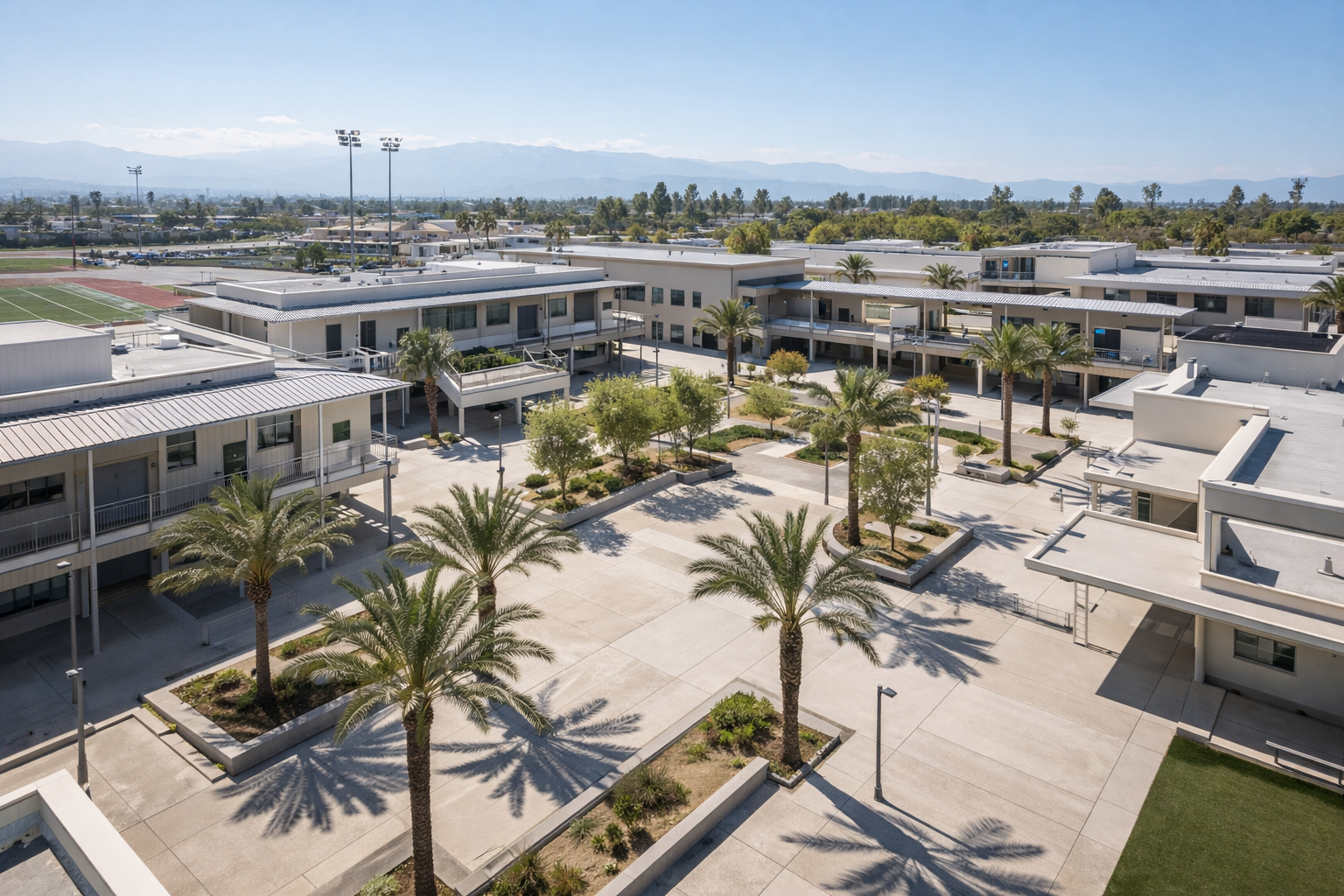
K-12 school districts across Southern California can use E-Rate Category 2 funding to offset the cost of WiFi, switching, and structured cabling.
- Category 1 (C1): Wide-area connectivity — internet access, fiber circuits, cellular data. Ongoing monthly service costs.
- Category 2 (C2): Internal connections — the equipment inside your buildings that connects to the internet. WiFi access points, switches, cabling, and related hardware and installation.
C2 is the bucket that funds infrastructure upgrades, and it operates on a five-year budget cycle.
How the C2 Budget Works
Each district receives a C2 budget based on the number of students enrolled. As of the current funding cycle, the budget is calculated at approximately $167 per student over a five-year period, with a minimum floor of around $25,000 per applicant.
A district with 5,000 students has a five-year C2 budget of approximately $835,000. The subsidy percentage (the portion E-Rate actually pays) depends on the district's discount rate, which is calculated from the percentage of students eligible for the National School Lunch Program (NSLP) and the location type (urban vs. rural). Discount rates range from 20% to 90%.
Example: A 5,000-student urban district with 60% NSLP eligibility has an 80% discount rate. Their $835,000 five-year C2 budget means E-Rate pays $668,000 and the district pays $167,000 — for nearly $835,000 worth of eligible infrastructure upgrades.
What Equipment Is C2 Eligible?
C2 eligible equipment for internal connections includes:

High-density 1:1 Chromebook classrooms are one of the primary use cases for E-Rate Category 2 infrastructure upgrades.
- Wireless access points — the most common C2 purchase
- Ethernet switches — both access layer and distribution switching
- Structured cabling — Cat6A, Cat6, and fiber optic cabling
- Wireless controllers — hardware or virtual
- UPS units — for network equipment protection
- Installation and configuration — labor costs for eligible equipment
Notable exclusions: computers, tablets, servers (except those serving as wireless controllers), and ongoing software subscriptions or licensing fees are not C2 eligible.
The Five-Year Budget Cycle
C2 budgets reset every five years. The current five-year cycle runs through Funding Year 2029. Districts that don't use their C2 budget within a funding year don't automatically lose it — unused budget carries forward within the five-year window — but any budget not used by the end of the five-year cycle is forfeited.
This creates a planning imperative: districts should map out infrastructure projects across the five-year cycle to maximize utilization of their C2 budget before it expires.
What Districts Need to Know About Working With Contractors
E-Rate has specific procurement requirements that affect how districts work with vendors and contractors:
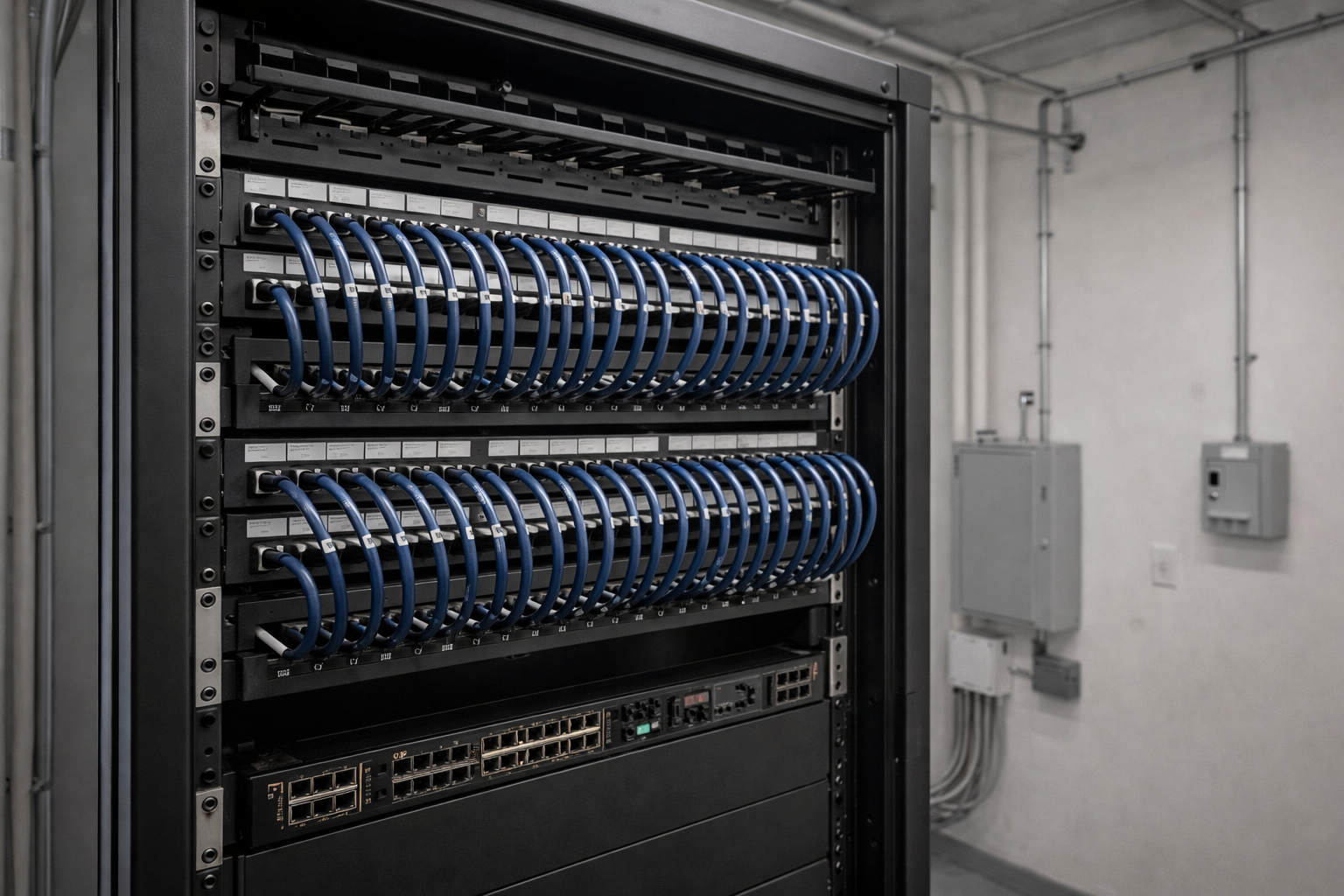
E-Rate Category 2 covers the internal connections infrastructure inside school buildings — including cabling, switches, and wireless APs.
Competitive Bidding
Districts must conduct a competitive bidding process using USAC's online system (EPC) before selecting a vendor. Contracts awarded without proper competitive bidding are not E-Rate eligible. The bidding process takes time — build at least 4–6 months of lead time into your project planning for the bidding cycle.
Form 470 and Form 471
The E-Rate application process involves filing a Form 470 (posting your competitive bid) and Form 471 (submitting your funding request after selecting a vendor). Your E-Rate consultant should handle these filings — if your district doesn't have a dedicated E-Rate consultant, USAC provides resources and many state associations offer consulting support.
SPIN Numbers and Eligible Vendors
E-Rate funding flows to vendors who have a Service Provider Identification Number (SPIN). Contractors providing installation services for C2 projects need to be registered. Confirm that any contractor you're working with understands E-Rate documentation requirements — eligible equipment itemization, installation scope documentation, and as-built documentation are all required for reimbursement.
Equipment Specifications Matter
The equipment specified in your Form 470 and Form 471 needs to match what's actually installed. Last-minute substitutions of AP models or switch hardware that weren't in the original bid can create reimbursement problems. Work with your contractor to specify equipment at the make and model level before the Form 470 is filed.
Common C2 Mistakes Districts Make
- Waiting too long: C2 budgets expire at the end of the five-year cycle. Districts that wait until Year 4 or 5 often can't execute projects fast enough to use their full budget.
- Under-specifying equipment: Districts sometimes specify minimum-spec APs to keep costs low, then need to replace them within a few years as device programs expand. It's more cost-effective to specify the right equipment for a 5-year life at the time of the C2 purchase.
- Not including installation in the scope: Installation labor is C2 eligible. Don't pay for installation out of general fund if it can be included in your E-Rate application.
- Not coordinating with your E-Rate consultant early: E-Rate consultants need to be involved before Form 470 is filed — not after you've already selected a vendor.
WCC Provides E-Rate Compatible K-12 WiFi and Network Infrastructure
WCC installs K-12 WiFi and network infrastructure throughout Southern California with full E-Rate documentation support. Prevailing wage certified for California public school district contracts.
Request a K-12 Wireless AssessmentWCC Technologies Group provides K-12 WiFi installation, network infrastructure, and structured cabling for school districts throughout Southern California. Learn more about our K-12 WiFi installation services and school structured cabling.